By Chris Genovese, Marketing Director
If you’ve noticed more conversation lately about automated license plate readers, or ALPRs, including Flock Safety cameras, you’re not imagining it. What was once a relatively obscure law-enforcement technology has suddenly become a subject of public meetings, news reports and some pretty passionate debate.
And interestingly, we’ve found that this debate doesn’t fit neatly into political boxes.
We’ve received some very interesting comments when we posted about ALPRs on our social accounts and talked with a cross section of people that we know in the rider community. Often, the person that we expect to be more troubled about government surveillance was the person defending cameras as an important tool for law enforcement—and vice versa. That’s a good reminder that reasonable people can look at the same issue and technology, value the same freedoms and public safety, and still reach very different conclusions. Those differences deserve to be met with respect and empathy.
So, let’s agree that there are compelling arguments on both sides.
Law enforcement faces a difficult reality. Technology has transformed crime, communications and the ability of criminals to organize. Social media can spread information—or misinformation—instantly. Phones, digital records, cameras and connected devices generate enormous amounts of information. And of course, all of this is further complicated by the emergence of artificial intelligence. Police agencies are expected to keep pace with all of it while solving and preventing crimes and protecting their communities on stretched budgets and with limited human resources.
ALPRs can help. They can provide investigators with information about vehicles associated with a crime, locate stolen vehicles and, by extension, missing individuals, and generate leads after an incident. Flock says its systems are designed around vehicle information rather than facial recognition, and that searches are logged and access is restricted to authorized users.
But the other side of the argument raises equally serious questions.
A license plate may belong to a motorcycle, car or truck, but it can also become a breadcrumb showing where a person went. Where you worship. Which political rally you attended. Whether you visited a medical facility. Where you worked, shopped or met with other people. The concern isn’t necessarily what an ALPR records today, but what a searchable record of an individual’s movements over time could potentially mean tomorrow—and who might want or have access to it.
That brings us back to a debate Americans have been having for generations: How much freedom are we willing to surrender in the name of safety?
The First Amendment protects speech, religion and peaceful assembly. The Fourth Amendment protects against unreasonable searches and seizures. None of those rights should become meaningless simply because technology has made surveillance easier. At the same time, constitutional rights don’t eliminate the legitimate responsibility of law enforcement to investigate crime and protect the public.
The challenge is finding the line—and establishing meaningful rules, transparency and accountability on both sides of it.
And something important has already happened as a result of this conversation. Flock Safety CEO Garrett Langley recently acknowledged shortcomings and announced significant changes, including reducing the default retention period for license-plate data from 30 days to seven, requiring case-related justification for searches and strengthening auditing of searches.
Whether you support ALPRs or oppose them, that’s something we should be able to recognize as a positive development. If public scrutiny results in stronger protections for our rights, that’s a result worth being proud of. It demonstrates that public debate can matter—and that technology companies and law enforcement agencies should expect the public to ask difficult questions.
If you’re curious whether your license plate appears in publicly available Flock search records, you can try your luck at have I been flocked. The site is independent of Flock Safety and government agencies and warns that its records are incomplete. They also point out that finding your plate there does not necessarily mean you were under investigation or even that your vehicle was captured by a camera.
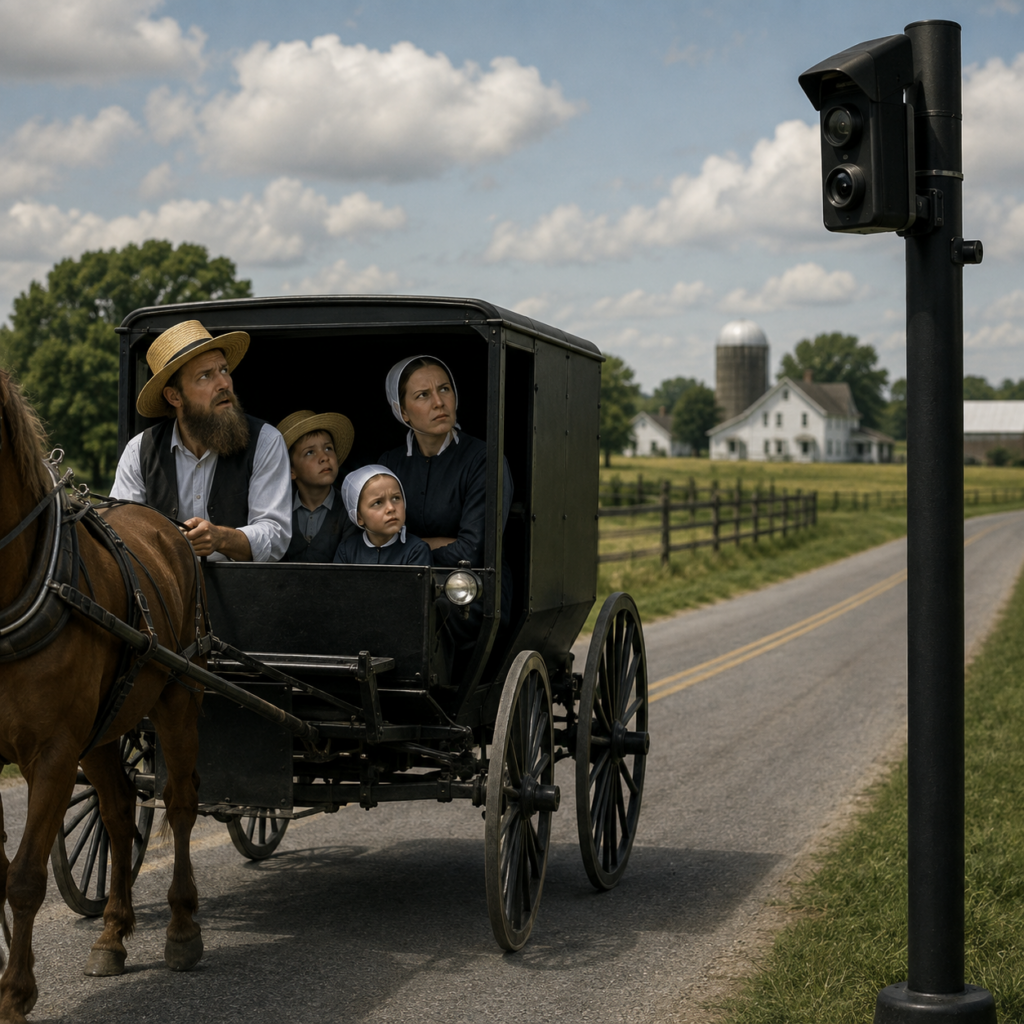
Another important point: we don’t suggest that anyone disable, damage or interfere with an ALPR camera. Whatever your position is on this technology, taking matters into your own hands in that way isn’t the answer.
We hear it all the time: Riders should always be aware of what’s going on around them. The next step is to ask questions and get involved.
For those who support the riding community, organizations like A.B.A.T.E. provide an opportunity to have a voice in this conversation and many others involving our freedom to enjoy the road on two or three wheels. You don’t have to agree with everyone around the table. In fact, you probably won’t. But participating gives riders and supporters a chance to understand the issues, communicate with lawmakers and policymakers, and make sure our perspective is heard.
Maybe that’s the bigger lesson here. Protecting public safety and protecting individual liberty aren’t supposed to be opposing goals, but it sometimes seems to work out that way. The difficult and critically important part is having the conversation and figuring out how to do both.
As the Quakers would say back in the day, “Speak truth to power.”